Professional Stock Tracking Tools
Recommended professional platforms for in-depth analysis and real-time tracking.
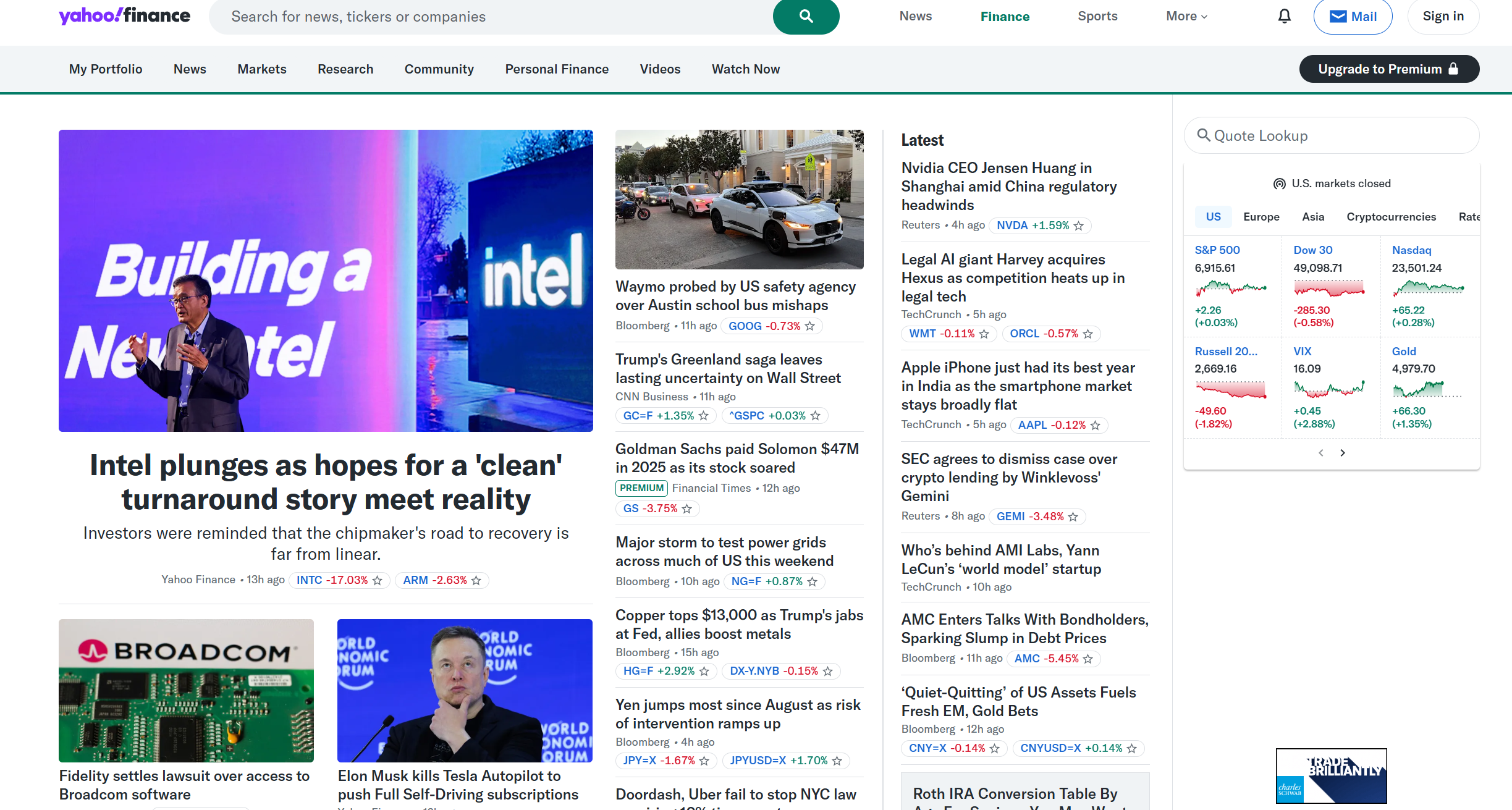
Yahoo Finance - Comprehensive Stock Tracking Tool
Yahoo Finance is one of the most widely used financial information platforms globally. It provides comprehensive information including real-time stock prices, historical data, financial statements, and analyst ratings.
Core Features:
- Real-time stock price updates and chart analysis
- Complete financial statements (income statement, balance sheet, cash flow statement)
- Analyst ratings and target prices
- News aggregation and market commentary
- Custom portfolio tracking
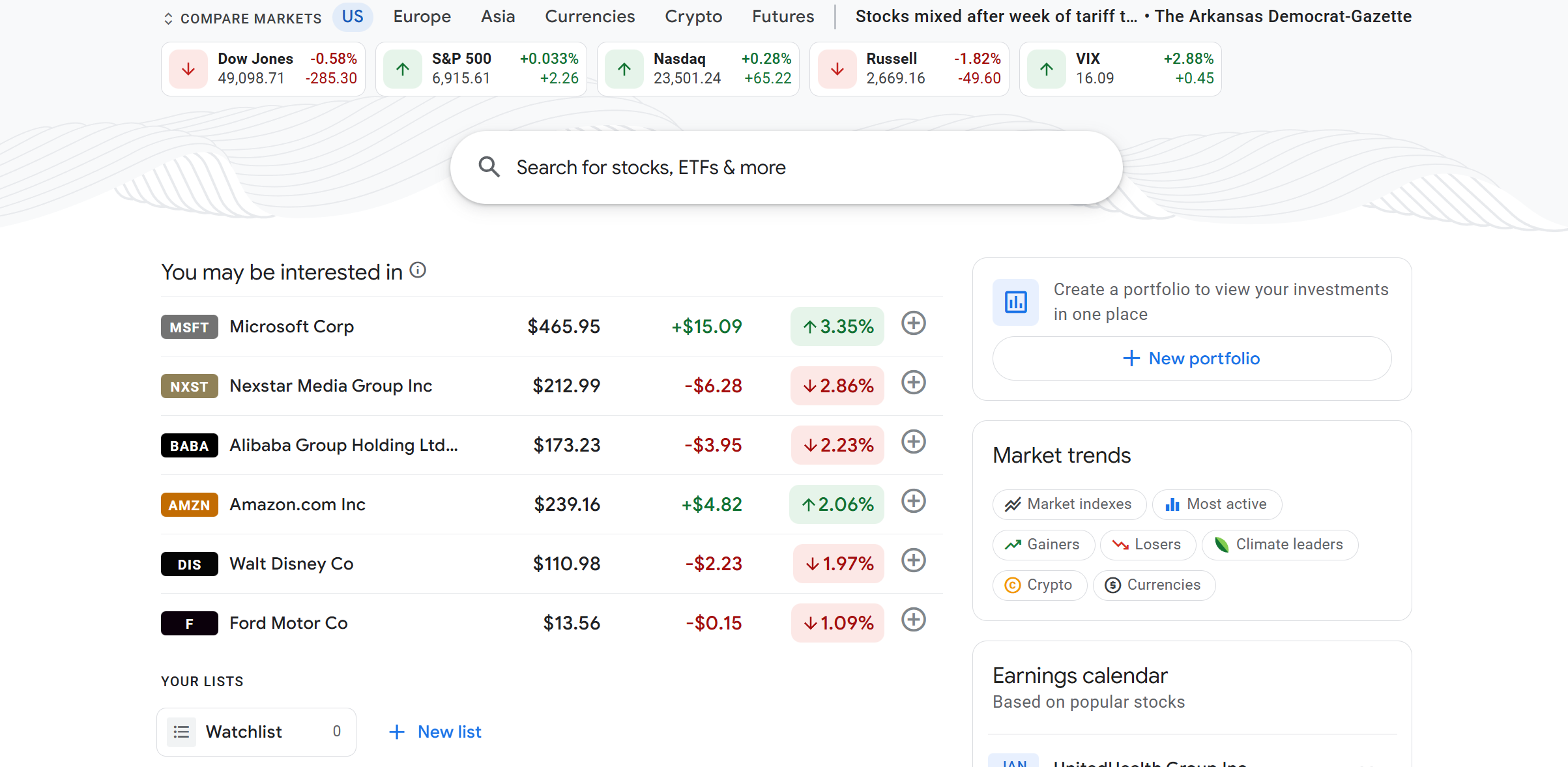
Google Finance - Market Overview and Trend Comparison
Google Finance provides a clean and intuitive interface, focusing on quick market overviews and cross-company comparison analysis.
Core Features:
- Clean price trend charts
- Multi-stock comparison functionality
- Industry sector analysis
- News integrated with Google Search
- Quick market index viewing
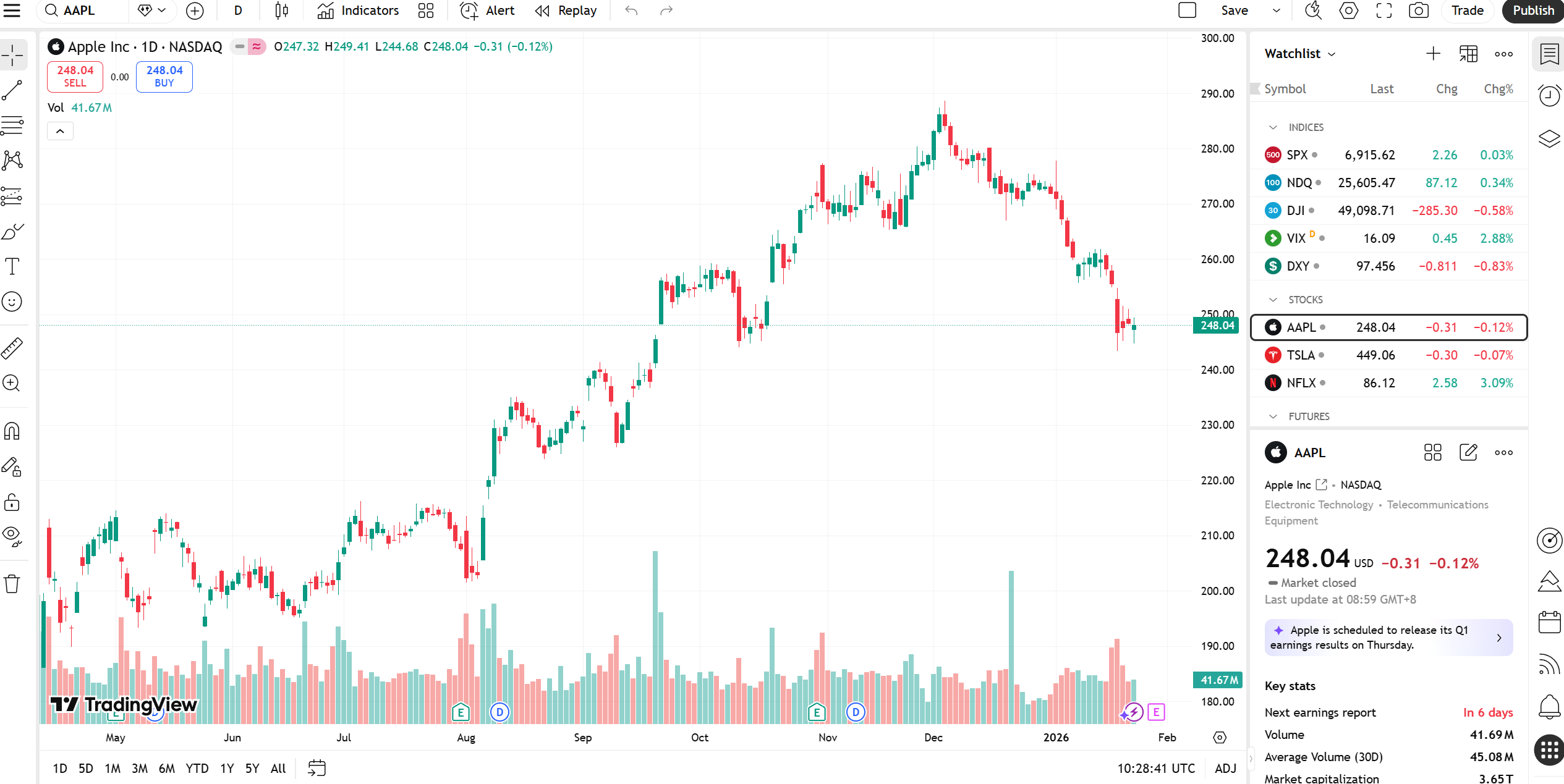
TradingView - Technical Analysis and Market Indicators
TradingView is the technical analysis platform of choice for professional traders, offering powerful charting tools and technical indicators.
Core Features:
- Advanced charts and drawing tools
- 200+ technical indicators (MA, RSI, MACD, etc.)
- Custom technical analysis scripts
- Community trading ideas sharing
- Multi-market, multi-timeframe analysis
Financial Terminology Glossary
Hover over terms to view detailed explanations (click also works)
- Funding Round
- A stage in which a company raises capital from investors. Each funding round represents different levels of company maturity, risk, and valuation. Common rounds include seed, angel, Series A through L. Early rounds have smaller amounts but higher risk, while later rounds have more capital but more mature companies.
- Post-Money Valuation
- The total valuation of a company after a funding round is completed. Calculated as: pre-money valuation + current round funding amount. This is a key metric for assessing company market value, reflecting investor confidence in future growth potential.
- Series A/B/C/D Funding
- Early and mid-stage private financing rounds identified by letters. Series A is typically the company's first large-scale funding for product-market validation; Series B is for expanding market share; Series C and beyond are for scaling and international expansion. Funding amounts typically increase each round, with valuations rising accordingly.
- P/E Ratio (Price-to-Earnings)
- The ratio of stock price to earnings per share, a commonly used metric for stock valuation. High P/E ratios may indicate high market expectations for future growth, or that the stock is overvalued. Tech stocks typically have higher P/E ratios.
- Market Cap (Market Capitalization)
- The total value of all outstanding shares of a company, calculated as: stock price × number of shares outstanding. Market cap is the primary metric for measuring company size, categorized as large-cap (>$10B), mid-cap ($2B-10B), and small-cap (<$2B).
- Technical Analysis
- A method of predicting future price movements by studying historical price and volume data. Common tools include moving averages (MA), relative strength index (RSI), MACD and other technical indicators, as well as chart patterns like support and resistance levels.
- Fundamental Analysis
- A method of determining a stock's intrinsic value by evaluating the company's financial condition, industry position, management team, competitive advantages, and other factors. Includes analyzing financial statements, industry trends, and macroeconomic environment.
- Liquidity
- The ease with which an asset can be converted to cash. High liquidity stocks have large trading volumes, small bid-ask spreads, and can be quickly traded. Liquidity is an important factor in assessing investment risk.
- Volatility
- The magnitude and frequency of stock price movements. High volatility means dramatic price changes with both higher risk and potential returns. Tech stocks and small-cap stocks typically have higher volatility than blue-chip stocks.
- Unicorn
- A privately held startup company valued at over $1 billion. These companies typically have unique advantages in technological innovation, business models, or market scale, attracting substantial venture capital investment.
- IPO (Initial Public Offering)
- The first time a company offers stock to the public. An IPO transforms a private company into a publicly traded one, allowing founders and early investors to partially exit while the company gains more capital for expansion.
- Growth Rate
- Measures the speed at which a company's revenue, profit, or valuation grows over time. High growth rates typically indicate the company is in rapid expansion, but may also involve higher risk. Investors typically focus on YoY (year-over-year) and QoQ (quarter-over-quarter) growth rates.